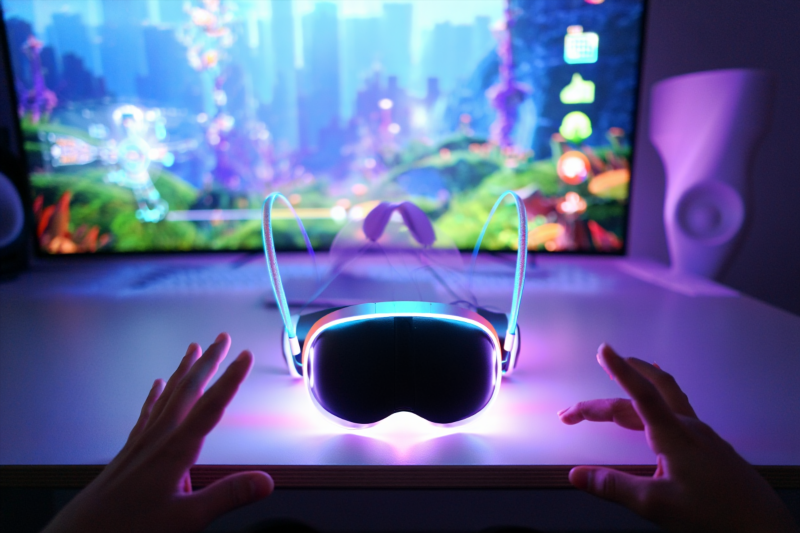
Future of Immersive Gaming with Brain Interfaces and Extended Reality
Unlocking a New Dimension in Player Experiences
The evolution of gaming technology has always been driven by the desire to deepen engagement and provide more immersive experiences. Today, the horizon of the gaming industry is expanding dramatically with the emergence of VR (Virtual Reality), XR (Extended Reality), and neural interfaces. These innovations are not just enhancing how players interact with digital worlds—they are transforming the very fabric of the gaming experience, making it more intuitive, visceral, and personalized.
The Rise of Extended Reality (XR) in Gaming
Extended Reality (XR) is an umbrella term encompassing Virtual Reality (VR), Augmented Reality (AR), and Mixed Reality (MR). This continuum of immersive technologies is redefining the boundaries between digital and physical environments.
Key Benefits of XR in Gaming:
- Enhanced immersion: Players are transported into fantastical worlds that respond seamlessly to their movements and actions.
- Real-world interaction: Augmented reality overlays game elements onto real environments, blending everyday life with gaming narratives.
- Social connectivity: XR enables shared virtual spaces that facilitate real-time interactions, fostering vibrant gaming communities.
Table 1: XR Technologies and Their Applications in Gaming
| Technology | Description | Example Applications |
| Virtual Reality (VR) | Fully immersive digital environments through headsets | FPS games, adventure titles |
| Augmented Reality (AR) | Overlays digital info onto real-world scenery | Location-based games, AR puzzles |
| Mixed Reality (MR) | Combines elements of VR and AR for interactive experiences | HoloLens experiences, collaborative design tools |
Brain-Computer Interfaces (BCI): The Next Level of Player Engagement
Neural interfaces or brain-computer links are a groundbreaking frontier in gaming. By enabling direct communication between the brain and the gaming system, BCIs promise to revolutionize how players control, perceive, and even experience games.
How Neural Interfaces Work:
- Use non-invasive sensors to detect electrical signals from neural activity.
- Translate brain signals into commands or in-game responses.
- Provide real-time feedback, creating a closed-loop system for immersive gameplay.
The Impact on Gaming:
- Intuitive Control: Move beyond traditional controllers; think your moves into reality.
- Enhanced Accessibility: Enable players with physical disabilities to participate more fully.
- Deep Psychological Engagement: Tap into players’ emotions and mental states for adaptive storytelling and gameplay.
Transforming Player Experiences
The integration of XR and neural interfaces creates unprecedented opportunities for personalized and emotionally resonant gaming. Imagine: your favorite game responds to your mental state, adjusting difficulty dynamically, or immersive worlds adapt fluidly to your intentions and reactions.
Examples of Future Scenarios:
- Mind-controlled adventures where players navigate worlds solely through thought.
- Emotionally adaptive narratives that shift based on your stress or excitement levels.
- Enhanced social presence in multiplayer realms with neural syncing, making cooperation more natural and intuitive.
Future Trends and Challenges
| Trend | Description | Implication |
| Advanced Neural Algorithms | Improving accuracy in interpreting neural signals | More precise and responsive gameplay |
| Hardware Miniaturization | Lighter, more comfortable devices | Broader adoption and prolonged use |
| Ethics and Privacy | Managing sensitive neural data | Establishing standards for safe use |
Challenges to Overcome:
- Ensuring safety and privacy in neural data collection.
- Addressing hardware limitations for comfortable, accessible devices.
- Developing standardized protocols for interoperability and regulation.
Why It Matters: Impacts on the Gaming Industry
The convergence of XR and neural interfaces is poised to shift the paradigm of immersive gaming:
- New genres and storytelling formats will emerge.
- The player’s psychological and emotional states will become central to game design.
- Industry insiders and developers have the opportunity to pioneer these transformative experiences, creating more engaging, inclusive, and innovative gaming ecosystems.
Frequently Asked Questions
Q: When will neural interface gaming become mainstream? A: While early prototypes and research are promising, widespread adoption hinges on technological advancements, cost reductions, and addressing ethical concerns. Expect gradual integration over the next 5-10 years.
Q: Will these technologies make traditional controllers obsolete? A: Not immediately. Initially, neural and XR technologies will complement existing controls, offering hybrid experiences. Over time, as tech matures, we may see more controller-free interactions.
Q: What are the risks associated with brain-computer gaming? A: Potential concerns include data privacy, psychological impacts, and hardware safety. Responsible development and regulation are essential to mitigate these risks.
The future of immersive gaming with brain interfaces and extended reality promises to redefine everything we know about player experiences. By bridging the gap between digital worlds and human cognition, these innovations will create more personalized, emotionally compelling, and truly immersive environments. As industry leaders, developers, and players embrace these developments, the next generation of gaming will be more transformative than ever before — a true revolution in entertainment technology.
Stay Ahead of the Curve To keep up with the latest in next-generation gaming innovations, subscribe to industry insights, participate in beta tests of emerging XR and neural interface technologies, and engage with forward-thinking communities transforming gaming into a new frontier.